
Educational article
AIS vs Form 26AS: How to Reconcile Your Tax Records
By CA. Narendra Vasavan R
Published
Check the relevant period and current official sources. A publication date is not confirmation that the content is current.
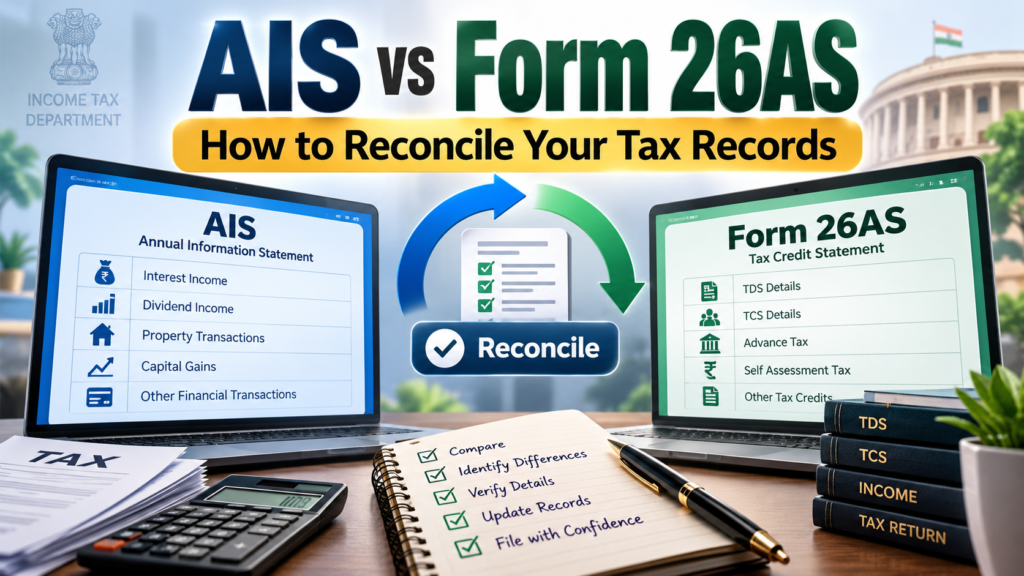
Quick answer: Use AIS to review reported financial information and Form 26AS to check TDS/TCS records. Reconcile both with your own documents before preparing an Indian income-tax return; neither replaces a complete income review.
What to review
A difference is a question to investigate, not an instruction to overwrite the return. Start with the source, period and transaction description. Two records can refer to one transaction, while an item absent from AIS may still need reporting. Separate income reconciliation from tax-credit reconciliation: a correct income figure does not automatically establish the credit available against it. Prepare one worksheet with document amount, reported amount, explanation and follow-up owner.
Worked example
A fictional taxpayer has an interest certificate for ₹18,000. Two AIS entries appear to total ₹36,000. The taxpayer first checks whether they relate to the same deposit and period. If the same income was reported twice, the evidence supports an explanation and appropriate feedback; it does not support blindly declaring twice the income.
Practical checklist
- Download records for the correct period and save dated copies.
- Match each entry to bank, salary, investment or other source evidence.
- List missing, duplicated and unexplained amounts separately.
- Resolve the differences and preserve the return computation and feedback acknowledgement.
Common mistake to avoid
Do not assume an AIS correction changes a filed return automatically. Check whether a separate lawful correction to the return is necessary for the relevant period.
Frequently asked questions
Does AIS contain every taxable receipt?
No. Review your own records for transactions that may be absent from AIS.
Should I copy AIS totals into my return?
Only after checking the underlying facts, classification and applicable tax treatment.
Official reference and further reading
Educational information only. Examples are hypothetical. Apply the law and reporting framework relevant to your facts and period, and obtain professional advice where needed. This article does not provide a certification, an assurance of compliance or a guaranteed outcome.
Article feedback
Send a factual correction, a clarity question or a suggestion. Feedback is private and is not displayed as a public review or testimonial.
Alternatively, email contact@narenthiran.com.